The 2026 US midterm results are a clear win for the Democrats. Projections by the Associated Press (AP), NBC News and other networks show Democrats taking control of both chambers of Congress. In our preview of the midterms, we noted that Democrats needed a net gain of 3 House seats and 4 Senate seats. They passed both targets comfortably.
A quick guide for readers outside the US: Congress, which makes laws, has two parts. The House of Representatives has 435 members, elected every two years. The Senate has 100 members, two per state. A law must pass both, and the Senate also approves the president's top appointments, such as judges.
Who won the House?
Democrats won the House. NBC News projected on election night, 3 November, that Democrats would win control, and AP called the House for Democrats early on Wednesday, 4 November.
The exact size of the majority is not settled, because many races are still being counted. Estimates differ:
- NBC News estimates Democrats will finish with about 258 seats to Republicans' 177. In its live tally checked on 5 November, Democrats had won 242 called races and Republicans 146, with 47 still uncalled.
- CBS News estimates Democrats will end with between 251 and 268 seats.
House Democratic leader Hakeem Jeffries is expected to become Speaker, the leader of the House, in January. He would be the first Black Speaker, NBC notes.
Who won the Senate?
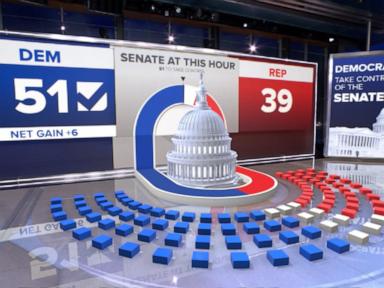
Democrats won the Senate, with a projected net gain of seven seats. AP called the Senate for Democrats late on election night.
| Before the election | After (projected, as of 5 November) | |
|---|---|---|
| Democrats (incl. independents who vote with them) | 47 | 54 |
| Republicans | 53 | 44 |
| Still uncalled | – | 2 (Alaska, Mississippi) |
Senate figures from NBC, ABC and CBS projections. 51 seats are needed for a clear majority.
The seven seats Democrats flipped from Republicans, according to AP and NBC:
- Texas: James Talarico beat Ken Paxton.
- Maine: Troy Jackson beat long-serving Senator Susan Collins, who has conceded.
- Ohio: Sherrod Brown beat Senator Jon Husted.
- North Carolina: former governor Roy Cooper won an open seat.
- Iowa: Josh Turek beat Ashley Hinson.
- Kansas: Adam Hamilton beat Senator Roger Marshall.
- South Carolina: Annie Andrews beat Darline Graham.
Democrats also held Georgia, where Jon Ossoff was re-elected, plus Michigan and New Hampshire.
Still too close to call: In Mississippi, fewer than 100 votes separated Republican Senator Cindy Hyde-Smith and Democrat Scott Colom, CNBC reported. In Alaska, Democrat Mary Peltola and Republican Senator Dan Sullivan were neck and neck. Alaska uses ranked-choice voting, so CBS says the result could take weeks.
Which key governor races did Democrats win?
Democrats flipped five governorships from Republicans, NBC reports, giving them a majority of governors for the first time in 16 years:
- Georgia: Keisha Lance Bottoms beat Rick Jackson.
- Texas: Gina Hinojosa beat Governor Greg Abbott, who was seeking a fifth term. She will be Texas's first Latina governor.
- Iowa: Rob Sand beat Zach Lahn.
- Ohio: Amy Acton beat Vivek Ramaswamy.
- Nevada: Attorney General Aaron Ford beat Republican Governor Joe Lombardo.
Kansas was still too close to call when NBC reported.
Why did Republicans lose?
Different people point to different reasons:
- Voters' mood: AP's voter survey found about three in four voters were "angry" or "dissatisfied" with the direction of the country, and about eight in ten said inflation had caused them financial hardship.
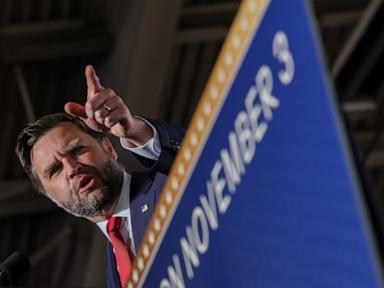
- The Iran war and oil prices: Vice-President JD Vance blamed the war with Iran, saying in a social media post that "everyone knows why we lost," CNBC reported. Trump called that view "largely true" but also said: "Not the war, the price," referring to oil prices.
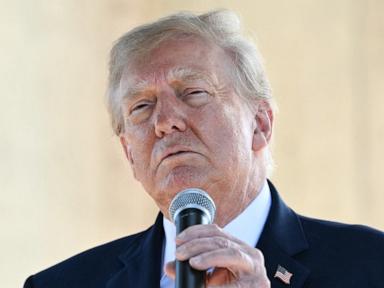
- Candidates: Trump told Politico that voters "didn't like the candidates in most cases," ABC News reported. He also told Fox News he was "a little bit surprised" and "thought we would do better."
- Redistricting: Republican states redrew House maps mid-decade to win extra seats. AP reports this mostly did not work: Republicans lost most of the Democratic-held seats they targeted, partly because many Hispanic voters moved away from them.
- Republican criticism of their own side: Some conservatives blamed Senate leader John Thune for not passing an election bill, the SAVE America Act, Fox News reported. Thune defended his party's record.
What changes for Trump?
Trump remains president until January 2029, but his plans will be much harder to pass.
- Laws: Democrats say they want to reverse Medicaid cuts, extend health insurance subsidies and limit Trump's power over tariffs, NBC reports. Trump can veto (block) their bills. Overturning a veto needs two-thirds of both chambers, which Democrats do not have. Trump told Fox News Democrats might send "insane" bills and he would veto them.
- Investigations: House committees will gain the power to demand documents and testimony. NBC reports Democrats plan to look into Trump family business deals. On impeachment, Jeffries said Democrats "haven't ruled anything in and we haven't ruled anything out."
- Appointments: A Democratic Senate can block Trump's nominees, including judges. AP says this is likely to limit his hopes of a more conservative Supreme Court.
Jeffries said Democrats were ready to "find bipartisan common ground," and Trump said he would "get along, probably, with the Democrats, unless they plan to be disruptive," CNBC reported. Thune said Senate Republicans "will not stand idly by" as Democrats try to undo their policies.
What happens to Mike Johnson?
House Speaker Mike Johnson will not run to lead House Republicans in the new Congress, his office confirmed on 4 November, CNBC reported; Punchbowl News first reported it. Jim Jordan and Steve Scalise are expected to compete for the job. In the Senate, Thune plans to run for Republican leader, a source told Fox News.
When does the new Congress start?
The new Congress is sworn in on 3 January 2027. Until then, the current Republican-led Congress stays in place.
How did the stock market react?
US stocks rose sharply on 4 November. In afternoon trading, the Dow Jones index was up about 1,500 points, or 2.9%, and the S&P 500 and Nasdaq were up nearly 2%, CNBC reported. CNBC linked the rise to Trump accepting the results, which removed uncertainty, and to a fall of more than 8% in US oil prices. This is not investment advice.
Sources: AP via PBS (Senate), AP via PBS (House), AP via WUNC (redistricting), NBC News Senate results, NBC News House results, NBC News on the House, NBC News on governors, CBS News, ABC News, CNBC live updates, CNBC markets and Fox News, 3–5 November 2026. Results are projections and may change as counting finishes.
Which result surprised you most? React below, and share this with someone following US politics.