Who did the study?
The research comes from Philipp Schmidbauer and Professor Andreas Nieder at the University of Tübingen's Institute of Neurobiology in Germany. It was published on 22 October 2026 in the journal Science, under the title "Ultrarapid decision-making in an avian brain."
What did the crows do?
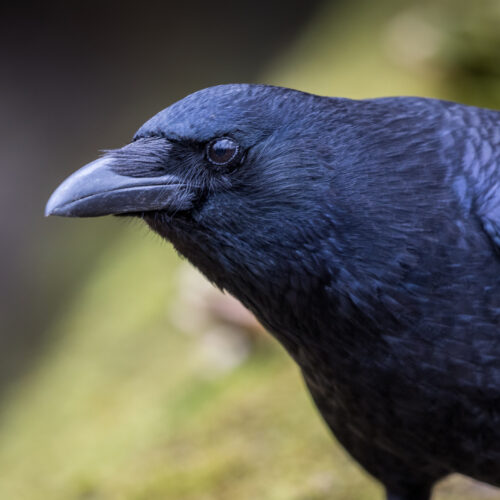
Two carrion crows were trained to watch a cloud of moving dots on a touchscreen. Their job was to decide whether most of the dots were moving left or right, and to answer by pecking a target on that side.
It's a classic test that scientists have used on humans and monkeys for decades, which is why the results can be compared with earlier studies.
How fast were they?
On average, the crows saw the dots, made up their minds and pecked in 235 milliseconds — under a quarter of a second.
Speed didn't cost them accuracy. "With clear signals, they achieved an accuracy of nearly 100 percent," Schmidbauer said. Even when the motion was hard to see, the crows still did better than guessing.
What was happening in their brains?
The team recorded brain cells in the nidopallium caudolaterale, a part of the bird brain that does a job similar to the prefrontal cortex in humans — the area we use to plan and decide.
Just 70 milliseconds after the dots appeared, the crows' brain signals already started to differ depending on which way the dots were moving — long before the birds pecked. The signal then built up until it crossed a threshold, and the crow made its choice. That is the same basic pattern scientists see in mammal brains, just faster.
Why would crows be so fast?
The researchers think it comes from how birds live. "Birds rely on their vision to carry out precise, rapid maneuvers during flight," Nieder said. A bird that lands on a branch or snatches food with its beak has very little time to react. Exactly how their brains do it still needs more research.
What are the limits?
- Only two crows took part, so the results need to be repeated with more birds.
- No humans were tested in the same experiment. The "twice as fast" comparison comes from earlier studies of people and monkeys doing similar tasks.
- Faster isn't the same as smarter. The study measured one kind of quick visual decision, not intelligence overall.
Why it matters
Crows are already famous for using tools, recognising human faces and solving puzzles. This study adds something new: their brains don't just reach good decisions — they reach them very quickly, using a brain built very differently from ours. It is another reason scientists now say "bird brain" should be a compliment.
Sources: University of Tübingen press release (23 October 2026, via EuropaWire), and reporting by NPR, Ars Technica and Live Science.
Did this surprise you? React with 😮 below, and share it with someone who still uses "bird brain" as an insult.